Assured Distraction
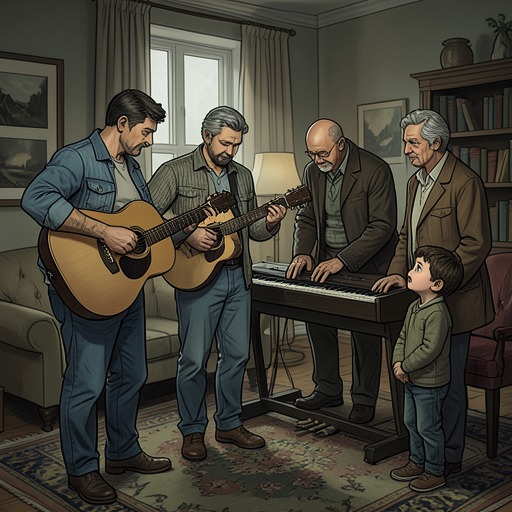
Hayden's TimbreAssured Distraction is both a successful band and the social center of the companion book to the Assured Distraction series. Its members move between stadiums, bars, recording work, football games, marriages, and family crises, so the group is never presented as merely a musical act. Its decisive significance lies in the way touring fame is gradually subordinated to loyalty, parenting, protection, and the creation of a chosen family around Crew Devillier, Timbre Simons, and the Powell household.
Identity and Public Presence
Assured Distraction is a recognized band whose fame is immediately legible to outsiders. At The Bar, Timbre Simons recognizes the men occupying a large booth and reacts with the excitement of a fan, while Ford Turner observes that the musicians are wealthy enough to be “millionaires ten times over, I’m sure.” The contrast establishes the band’s public image: glamorous, financially successful, and powerful within the Austin social world, even when the narrative is more interested in what that status cannot protect them from.
The group’s identity is also carried through repeated signs of performance and affiliation. A band member introduces himself by explaining, “I’m from the band, too,” and Hayden Devillier is later seen wearing a faded dark-brown shirt from one of Assured Distraction’s concerts. The worn shirt turns merchandise into something more intimate: the band’s presence continues in ordinary domestic life, long after a concert has ended. Assured Distraction is a public institution, but it is also a collection of recurring personal symbols, friendships, and obligations.
Touring, Work, and Family Priorities
The band’s professional life includes extended touring and collaboration beyond its own lineup. Assured Distraction tours before joining Chandler’s father’s band, Steel, in Europe. The scale of that movement explains the band’s reach, but it also supplies the circumstances against which the characters measure their priorities. Touring is not treated as an unquestioned reward; it becomes a demanding way of life that can conflict with children’s health, schooling, sports, and the need for a stable home.
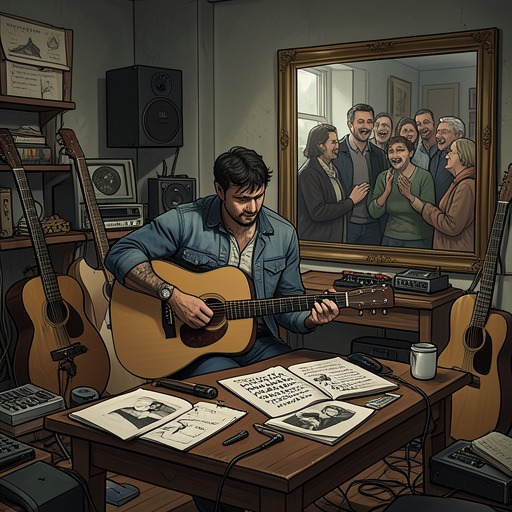
Hayden’s history makes that conflict explicit. After Crew Devillier develops asthma and could have died, Hayden gives up life on the road. He continues writing music with several bands and works as a studio musician at 13 Recordings, earning enough to provide a good life for himself and Crew without the income or visibility of rock-star touring. His choice reframes Assured Distraction’s success: the band may represent wealth and artistic achievement, but responsible fatherhood requires Hayden to leave the road behind.
Other families negotiate the same tension differently. Peri Powell stops traveling with the band after Tucker Powell chooses sports over touring, while Ryan Powell and Peri return from the tour for a seventh-grade football game. The entire Powell family gathers for the occasion, making the game a counterweight to the band’s international schedule. The musicians’ domestic commitments do not erase Assured Distraction; instead, they determine when the band travels, when it returns, and what its members consider worth interrupting a tour to attend.
Assured Distraction as Chosen Family
Within Austin, Assured Distraction functions as Hayden’s family even though his biological mother lives in East Texas. Hayden explains that the band is his family there, that everyone loves Crew as their own, and that its members look out for one another. This declaration gives the band a structure beyond friendship: it supplies protection, accountability, and a communal claim on the well-being of its members’ children and partners.
That protective network is introduced to Timbre through a roster of relationships rather than through a formal description of the band. She is told that she will meet Lola, Gunner Powell’s wife, Chandler, Carter, and Halo, and that their collective history is “a great story.” The group’s identity therefore includes spouses and long-standing companions. The boundary between band and household is deliberately porous, especially when the Powell family comes home from riding bicycles while Timbre heats soup. Domestic scenes absorb the band’s social world, showing that the group’s deepest continuity is maintained around kitchens, children, sports, and shared routines rather than only onstage.
Crew’s place within this family is especially important. Hayden tells visitors that Crew has grown dramatically and will soon stand eye-to-eye with him, while also inviting them to attend football games where the boys are among the best players on the team. Crew is not a mascot for the musicians’ fame; he is a child watched over by adults whose band identity has become a system of practical care. The members’ jokes, rough language, and concern about what children overhear further reveal a household attempting to preserve childhood within a culture of adult performers.
Protection, Conflict, and Crisis
The band’s protective ideal becomes most forceful when Timbre is endangered. After she rides a bus alone in the middle of the night, Hayden angrily stresses that someone could have forced her off with a gun or knife without the driver realizing what was happening. His response is excessive in language but grounded in a real fear of vulnerability. Assured Distraction’s community is built on vigilance, and that vigilance can become confrontational when a loved one’s safety appears to have been treated casually.
The same protective structure is later tested by direct violence. Krissy Thompson and Ella Sullivan threaten Timbre with a knife, discuss marking her face, and contemplate carving a message into Crew’s forehead. Ella also insists that Crew will never leave her sight before drawing a gun. These threats expose the difference between the band’s protective solidarity and the kidnappers’ coercive control. Both systems claim possession of a person, but Assured Distraction’s stated model is mutual care, whereas Krissy and Ella use isolation, humiliation, bodily threat, and weapons to eliminate choice.
When Timbre returns, the band members and their wives are present together. Their presence at the reunion turns collective recognition into a form of restoration: Timbre is escorted into a room where the people who have become her community are waiting. The band’s importance is consequently measured not by its celebrity but by its ability to gather around its members after captivity, danger, and separation.
Narrative Role and Legacy
Assured Distraction supplies the series with its recurring social architecture. It links professional music to family life, connects Hayden’s past on the road to his present as a father, and gives Timbre entry into a community that is larger than the romantic relationship at the story’s center. The band also creates recurring contrasts between spectacle and stability: stadiums and recording studios stand beside football benches, bicycles, soup, worn concert shirts, and children growing up under communal supervision.
Its most significant narrative transformation is therefore not a change in musical status but a change in emphasis. The series begins from the energy of a band on tour, yet its emotional destination is a network of people who choose one another repeatedly. At the final celebration, Keeton MacDonald, Assured Distraction’s lead singer, calls Hayden and Timbre to the dance floor; Crew carries Timbre’s purse to a table, and Hayden speaks of recognizing her from their first rain-soaked meeting and of fate repeatedly bringing them together. Hayden then holds her while music written for Assured Distraction plays. The band’s song becomes the setting for a private commitment, joining public artistry to personal belonging.
The companion book explicitly presents Assured Distraction as more than a band on a bus. Its members’ tours, jokes, romances, marriages, children, threats, and reunions form the continuing world through which the series understands family. Even the closing reflection describes the ride of Assured Distraction as changing from a rougher journey into something more like a limousine than a pickup. The image captures the band’s lasting role: not an escape from responsibility, but the vehicle through which music, friendship, and chosen family travel together.